In digital humanities, mapping can be defined in so many different ways, there is no easy answer to these questions. In fact, your research can dictate the parameter of choices that define your map. There are many alternatives to mapping but here we will be focusing on Google my maps. Google my maps is your way to keep track of places. This platform is very beneficial from the point of travelling, pinning locations, and customizing your own map. In our blog today, we will be using google my maps to help us better understand the life achievements, books, milestones of an author named Thomas Hardy. In order to map, we will need to extract locations from a platform called TopoText.
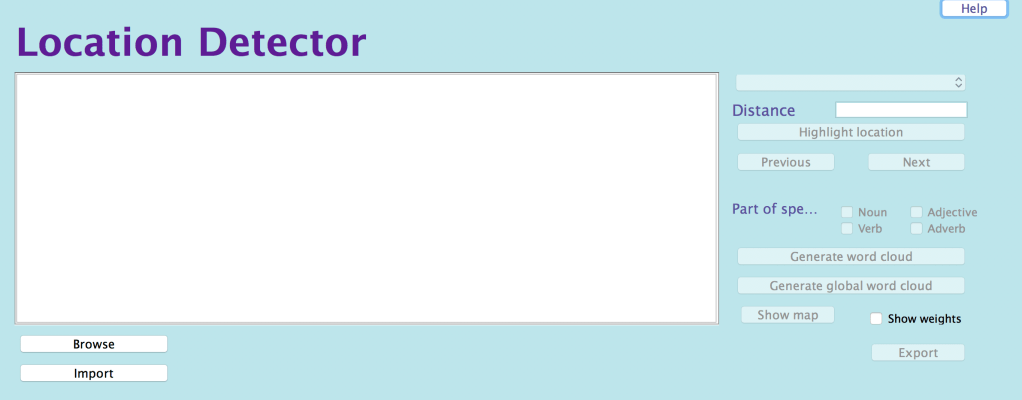
TopoText is an interactive tool for digital mapping of literary texts. It simply takes an inputted novel and promptly extracts all the locations name in the text. The platform can calculate the number of times a place was shown and it can show the most frequent word used within a given place. So, how does TopoText work? Well, it is really simple! First, you must download a particular novel from Gutenberg as a Plain Text format.
Then simply press browse and import the novel you saved. TopoText will then give you the numerous locations it has found. However, we were facing so many difficulties with the platform. It was so easy to use but there were many technical problems. The system kept crashing, therefore no locations were extracted. My teammates and I tried several different options. We all tried uploading texts but none of them worked on the platform. We tried re-downloading the platform and re-opening it but also it did not work.
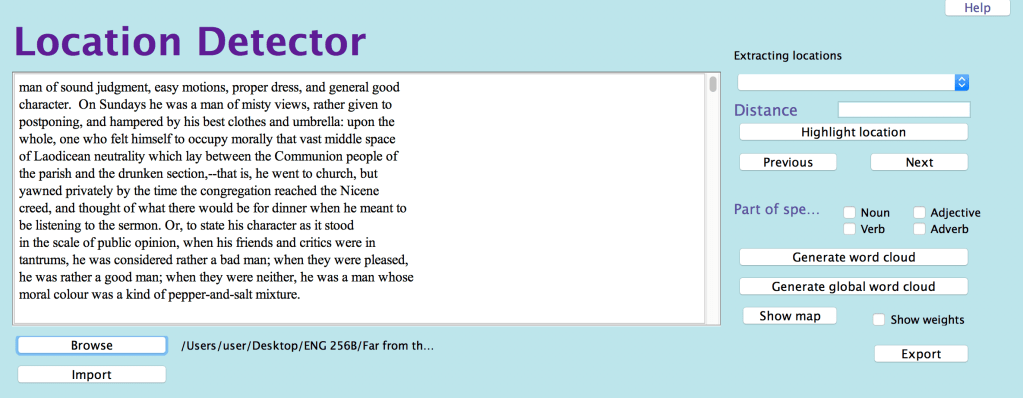
This is what TopoText is showing us. It says extracting location but we waited for 10 – 20 minutes and no locations appeared. We also read papers about how TopoText works. We did the exactly the same thing as the instructions said but there was no hope. We tried different books and uploaded them to TopoText but it always gave us the same scenario (Extracting Locations). We are sorry if we disappointed you, but my teammates and I tried our best to make this work. We couldn’t see locations from Thomas Hardy’s books so we had to put more work into google my maps.
Google my maps as we said before is an amazing tool to track and customize your own map. But how does google my maps benefit our study on Thomas Hardy? Well, google my maps has so many features that helps us map and better understand Thomas Hardy’s life. Google my maps is all about visualization and almost 65% of the population are visual. This what makes this platform very eye – catching and easily understandable. You can customize your map by adding photos, videos, and notes to each of your layers. It’s highly customizable because so many things can be done on the platform. You can use custom icons, layers, and colors so its easy to read at first glance. For example, you can use bed icons for hotels, swimming icons for beaches, food icons for restaurants. Our experience with google my maps was shockingly easy. We thought we would have a tough time grasping the platform but we were relatively erroneous. After watching YouTube videos and with the help of our beloved professor in class, we immediately got the gist of it.

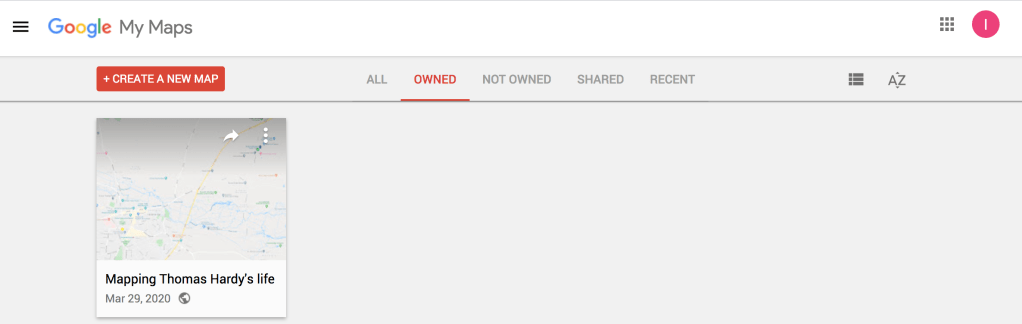
First, you type google my maps on google and promptly the platform will be shown.
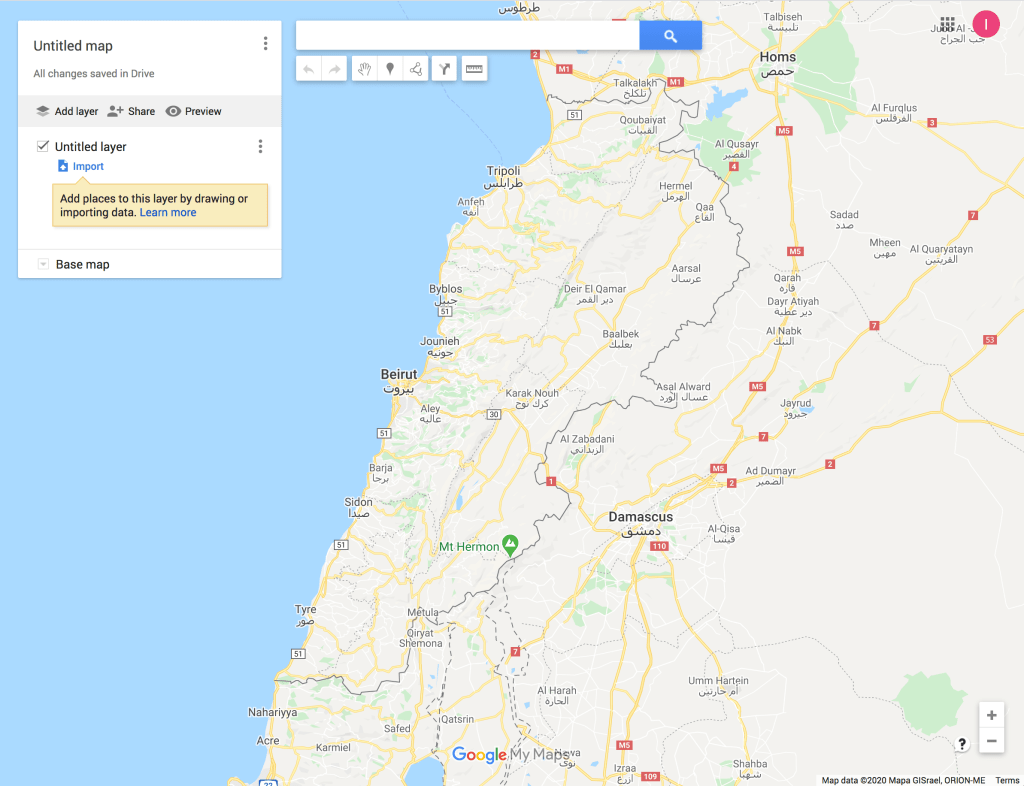
You click on google my maps and this platform will be available to the users. Press on create new map and this page will be given!
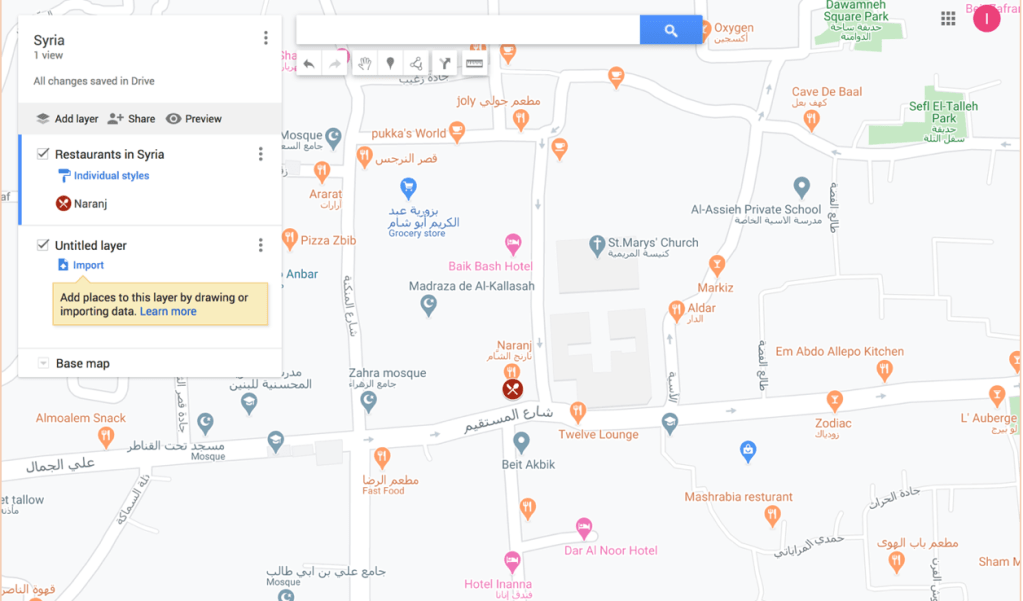
Now you just add different layers to the things you want to map. You can think of layers like different categories. For example, if you want to map a life of a celebrity, author, or a scholar you start with their early career as a 1st layer. The 2nd layer will be about his career, and etc. While adding different places under each layer, you can customize your specific icon and color. To show you a better visual, this is an example:
After you finish mapping, you can save your work and share it with everyone! Now to start our mapping on Thomas Hardy’s life!
Today we will be using google my maps to map out Thomas Hardy’s life. We will be dividing the mapping into four layers: Hardy’s Early Years, Achievements, Early Career and Literary works, and Death. First, we are going to start with Thomas Hardy’s early life.
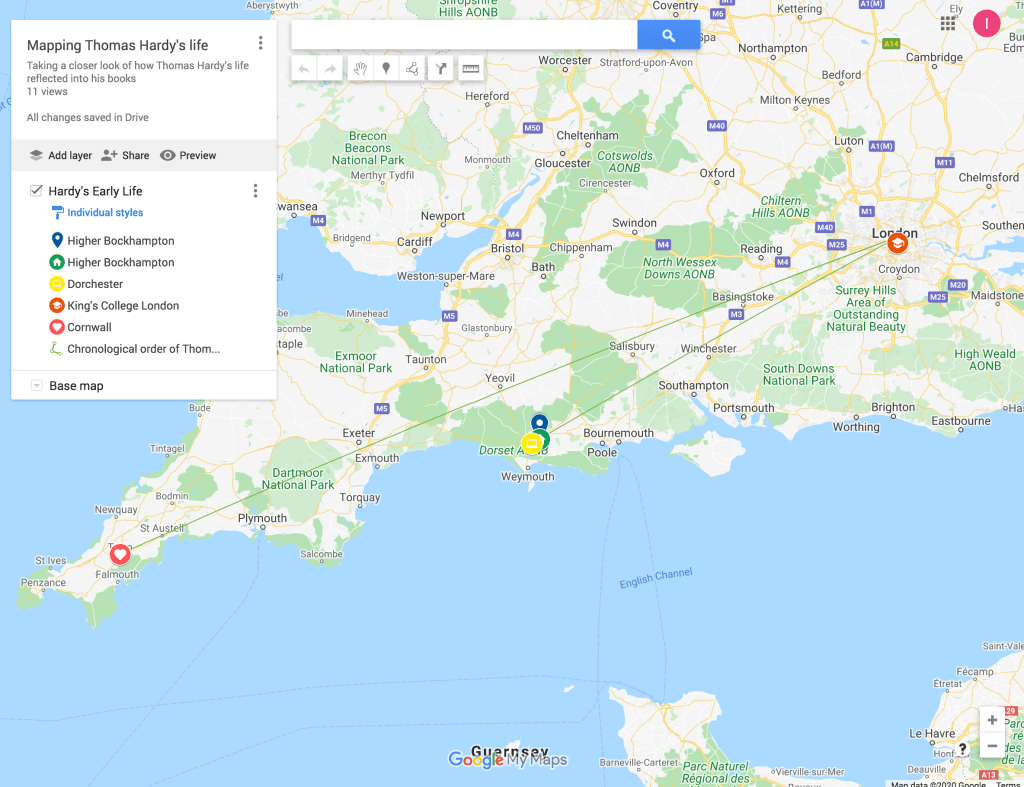
Thomas Hardy was born on June 2, 1840, in Higher Bockhampton, Dorset, England, to Thomas and Jemima Hardy. Thomas didn’t live a privileged life. His family were extremely poor but his parents did the best to educate him. Even though, they couldn’t afford to enroll Thomas in school, his mother educated him until he was eight years old. He then gained admission at Mr. Last’s Academy for Young Gentlemen. He showed great potential academically but the lack of financial means led to the end of his studies at the age of sixteen. Thomas Hardy wasn’t born into the privileged, well- educated, financially independent class that dominated Victorian Culture. Instead, he was from a rural artisan family which was highly criticized. He adored writing; however, because of his social class he couldn’t truly develop his skills in writing. Following his education, he became a local architect. Despite not having the best education, he was extremely talented as an architect. He also met the love of his life through his architecture career, her name was Emma Gifford. However, Thomas Hardy was very unhappy. Even though he was a talented person, he wanted to spill out his emotions and his perception of the world through his books. Why is all of this information so prominent and imperative to our research questions? It is because every single aspect of hardship he grew up with, was written in his novels. The semi –fictional Wessex, the love of his life, the social class, the education, and the birthplace. These factors will be delved into more in our next layer which is Thomas Hardy’s career!
Early Career and Literary works
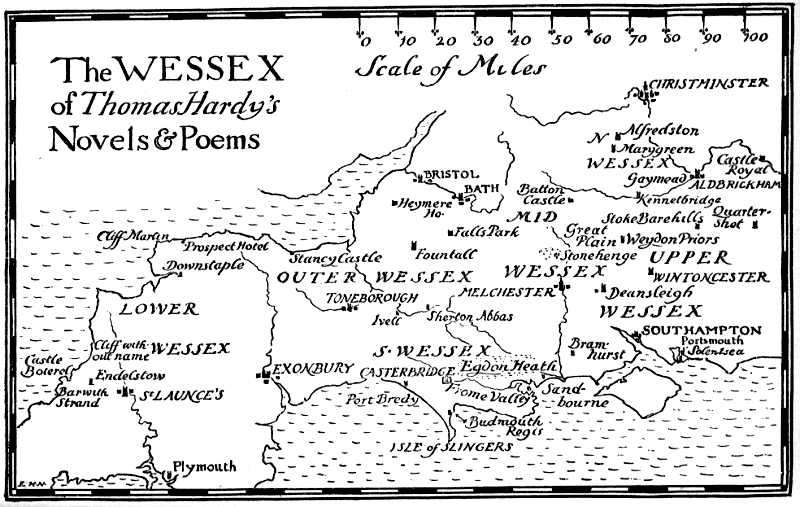
We found that Hardy created “Wessex”, a semi-real, semi-mythical region that he used in all his novels, however this place is not purely fictional, it is named after Anglo-Saxon kingdom that existed in the southern region of England, Dorset pinpointed in Google My Maps. He chose to create “Wessex” and include it in all of his novels because it’s where he grew up, and felt like this small area was unknown to people so he wanted to give insight into its customs and introduce people to it. He divided Wessex into several regions (south, mid, upper) and assigned each area to a different novel. By doing that, he hoped to create a “series of novels”. For example, in his novel Jude the Obscure (1895), the events of the novel took place in upper-mid Wessex, in Return of the Native (1878), the events take place in South Wessex, and the events of Far from the Madding Crowd (1874), start in Teller Down Gate a region in the southwestern region of England.
While going through his novels, we also noticed that Hardy created new names for some locations that are inspired by places that really exist and are all pinpointed in our map. In The Mayor of Casterbridge (1886), we found many examples: Dorchester was named after Casterbridge, “Barclays Bank” is where the mayor used to live, and “The Sow and Acorn” is “Acorn Inn” is where he used to enjoy drinking. In his other novel Tess of the d’Urbervilles (1891), “Marlott” is a fictional village also created by Hardy, and it is based on “Marnhull”, a small village in the county of Dorset.
After mapping the texts, we noticed how much Dorset was important for Thomas Hardy. The creation of “Wessex” and all the small villages in it where the events of his books take place are close to each other, which shows that he really wanted people to get to know the area of Dorset and learn about it through his novels.
Achievements
Thomas Hardy has left his mark in the literary world as being one of the greatest authors in literature. His novel Under the Greenwood Tree sparked popular interest and his success continued from then on. However, it is clear that at the start of his career he lost his belief in a divinely ordered universe. He used to go to church and believe in God, however when he moved to London, exposure to Charles Dawin’s work on demythologized religion impacted his view on life. This, in turn, made the emotions expressed in his work more dark and full of hopelessness and emptiness… resulting in many negative reviews from the public. Nevertheless, he continued his literary journey and wrote some of the best pieces of literature today. Due to his divine works, he was awarded the Order of Merit in 1910 at the Royal Institute of British Architect in Mann Island, Liverpool, UK. That same year he was nominated for a Nobel Prize in Literature by the Swedish Academy, Sweden, and eleven more times after that. After his novel “Far From the Madding Crowd” he was highly criticized for his perspective on social classes and gender conformity, causing people to overlook his achievements and forget about all of the effort, creativity, and ability to deliver his message. His achievements do not stop at prizes, as the success of his voice in literature is a major achievement on its own.
Death
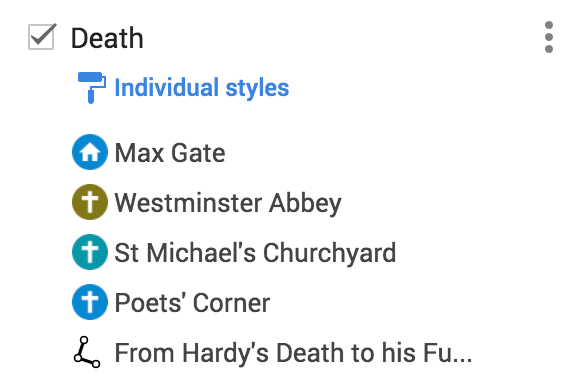
Thomas Hardy left the world in an unusual way. Just like most humans, he died of an illness. He became ill with pleurisy in December 1927 and died a month later, on January 11 1928 at Max Gate, his home, in Dorchester, England. He was writing his final poem to his wife on his deathbed. His funeral took place at Westminster Abbey on January 16 1928, located in London, England. His wish to be buried with his ex-wife Emma in Stinford was denied, since his executor Sir Sydney Carlyle Cockerell insisted that he be placed in the Poets’ Corner in Westminster Abbey. Therefore, his family and friends, and the executor came to a compromise that his heart must be buried in Stinsford with his ex-wife and parents and that his ashes must be placed in the Poets’ Corner. This could sound very odd, but Hardy wanted to be buried with his loved ones, and we feel like the fact that they put his heart with them symbolizes the strong feeling of love that he had towards them, and that he has a part of himself buried with them for eternity.
How the author reshaped our thinking
The experience of using google my maps was great but what was more interesting was the experience mapping Thomas Hardy as an author. How does mapping tell us more about the author? Well, as a group, we did not know much about the author. We just thought he was an ordinary author who wrote great books and got famous. However, when we mapped his entire career, we felt this emotional attachment with the author. While we were mapping Thomas Hardy’s life, we started to love the author more and more. It never occurred to us that he led a vile and obscure life. He was poor, not very well taught, and undermined because of society’s social class. Even though he was talented in writing, he never had the chance to show off his skills. He first started as an architect and he skyrocketed in this career. He won prizes for his great architectural designs. However, he decided to pivot from architecture and continue his career in writing. We were bewildered by the fact that he pivoted from his great career as an architect. Why not continue as a successful architecture and risk your life for writing? But that was the amusing part of Thomas Hardy’s life, he was obstinate to write even if the whole world were to criticize him. He started off with a couple of books but they never appeared to make a hit. Far from the madding crowd, was the first book that made Thomas Hardy famous. The book was perceived as one of the best books by the people. He gained a lot of attention and won a lot of awards during his career. His achievements were implausible for an author who left everything behind for writing. After far from the madding crowd, he published two books : Jude the obscure and Tess of the d’urbervilles. These books were highly criticized because they were facts. He criticized how men treat women, how social class differentiated us, and how people look upon each other. Even though he was madly in love with Emma (Wife), he always projected his thoughts about marriage as being adverse. It is true that he was famous, achieved inconceivable awards, and had a true loving wife. This is all true and real but his novels were the real thing. Why? Because it was his emotions and his logical thinking that was put in his novels. At his time, all the people criticized him for his point of view. However, in this age, the whole world respects his point of view through his books because it’s the truth. We, as a group of students, were affected by how Thomas Hardy projected his books. He definitely enlightened us about how you must always do what you love. The things he went through in his life: unprivileged life, not well – educated, inequality between people, criticized for his books and the disparity between men and women. These factors genuinely reshaped our thinking about the author. We see Thomas Hardy as an honorable person who worked hard, told the truth about society, tried to spill his emotions through his books, and a person who was not given an abundant amount of attention for his amazing writing skills. The fact that we thought he was an ordinary author who got suddenly famous for his books was immediately diminished from our minds. This new perspective is all thanks to mapping his career and delving deeper into his personal life.
Advantages & Disadvantages
Google My Maps was a very interesting tool to use. It was very enjoyable learning about Thomas Hardy’s life and manually mapping it using this tool. Without doubt, Google My Maps has its advantages as well as its disadvantages. On one hand, to make Hardy’s life easier to understand, it was very useful and helped us organize our ideas in a more effective way by adding different layers. In our case, we added four layers: Early Life, Achievement, Literary Works and Death. In addition, Google My Maps allows us to customize our markers, each by modifying the icon or by changing its color. Many icons were available, which made it easier for us. This is very useful since it would be easier to identify the different places that Hardy has been to in his life by just looking at the map. Changing the color of the marker was very helpful because as we look at the legend, we can see that the various events in his life were centered in the same places, and changing the colors would allow us to distinguish these various events. Also, clicking on these markers allows us to get a visual description of the event that occured in that location. We are also able to draw lines from one location to another in order to track the chronological order of the events.
On the other hand, when we mark a location, whether it was a church or a home, the icon is the same. We have to manually change the icon which takes more time, but is not a big issue. For example, if the location was a church, we would have to click on the icon and look for the icon that represents a home. And finally, once we added the layers, we couldn’t customize the order for each layer which makes it harder to understand the chronological order of Hardy’s life, being Early Life, Literary Works and Achievements, then Death.
All in all, our experience with Google My Maps was very enjoyable and useful. We were able to design Hardy’s life on a map, with each event having its own description.
Real and Accurate
The most preferred “true” and “accurate” tool we used to analyze Thomas Hardy’s works among the two tools we were introduced to is definitely Google MyMaps. It is much more effective than text, as it gives us the ability to visualize the events that took place in the author’s life. It is like a story told through different layers in a map. Additionally, it is extremely user friendly and creates a colorful association between locations depending on the layers, putting the pieces of his life together on a real life map we use in our daily lives. With Google MyMaps, our group was able to pin exact locations with easy accessibility to share amongst each other, add layers, and zoom in to satisfy our curiosity by viewing where exactly each pin is and what is near it. Moreover, we could customize layers with real locations, and layers with metaphorical locations that Thomas Hardy made up, such as Wessex. All in all, the Google MyMaps tool was our favorite due to its user friendliness and visual appeal.
Check out our mapping over here:
https://drive.google.com/open?id=1yuLn1Lg5DXpL0ko3rJ5HCGQkZIFPPMT_&usp=sharing
Written by: Ibrahim Issa, Vanessa El Ali, Tamara Haidar, and Mariam Allaw
 Issa's Blog