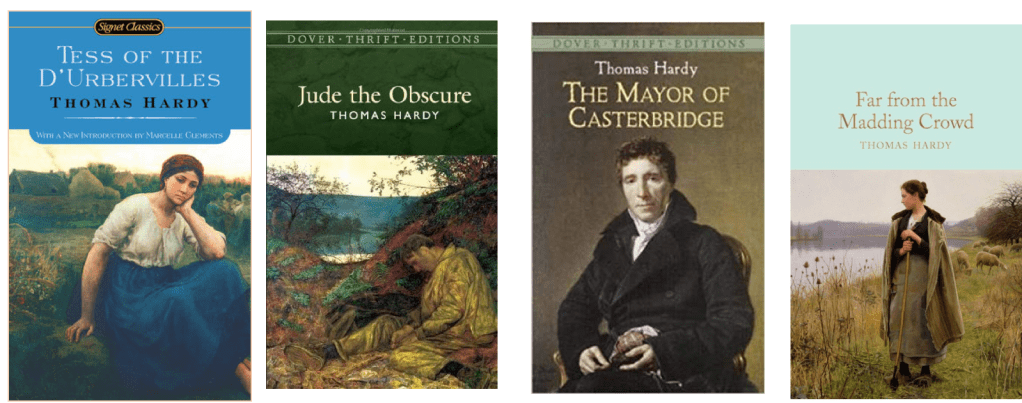
For our ENGL256B final project, we have chosen to base our project on the work of Thomas Hardy. We have decided on 4 novels that were written by him, that we will use to analyze using digital tools that we have been introduced to in this course, along with others that we will progressively learn how to utilize for analysis. The 4 novels we have chosen are ‘Tess of the d’Urbervilles’(1891), ‘Far from the Madding Crowd’ (1874), ‘Jude the Obscure’ (1895) and ‘The Mayor of Casterbridge’ (1886). These 4 novels were chosen based on them being the most favorable and popular novels that the internet agrees on.

in our digital humanities course, we were fascinated by the numerous tools used to analyze texts. We were exposed to 2 prominent and unfamiliar tools that helped us by interpreting texts. These tools are CLIC and Voyant. Both tools are open source on the web and they support scholarly reading and interpretation of texts or corpus, particularly by scholars in the digital humanities, but also by students and the general public. In todays blog, we will be introducing each tool and how they helped us in analyzing Thomas Hardy’s texts.
Corpus Linguistic Context, also known as CLiC, is a DH tool that includes 19th– century corpora. CLiC lets you interpret and analyze texts through distant reading. We will be explaining a bit of how CLiC is used before we get into the fun part!
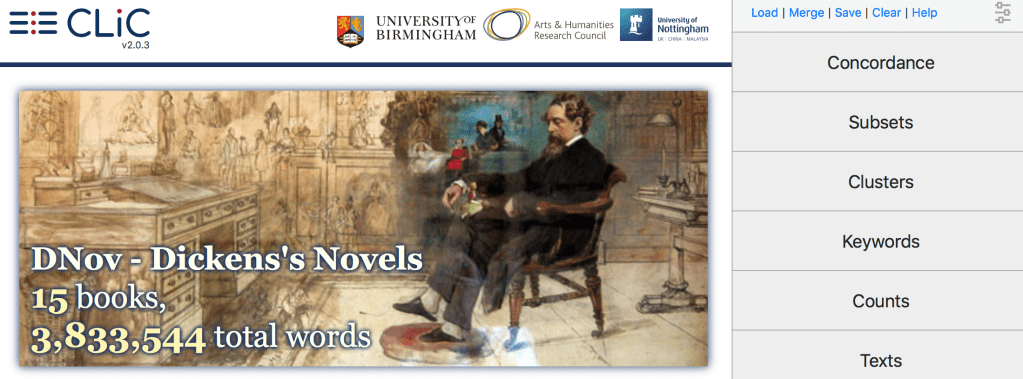
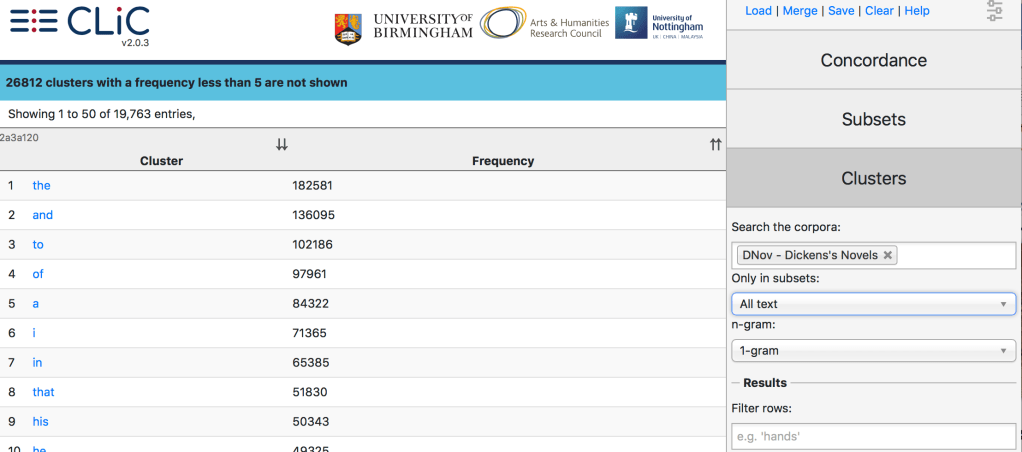
When you first enter CLiC, this page is shown as the home page. Now to your right hand size you will find different features available on CLiC which are: Concordance, Subsets, Clusters, Keywords, Counts, and Texts. These features are really amazing as they let you understand authors better. When you first click on Concordance, you will notice in the options list famous authors (Charles Dickens, African American writers, and etc.). In corpora, there are different features, for example, searching for one word, quotes, and non-quotes. For example, in Cluster, you can press 1 gram and see how frequently a word was used. Try it yourself, put in the corpora Charles Dickens and go to clusters. Press 1 Gram and the word “the” is used frequently 182,581 times.
Now for the fun part!
Now let’s go through our research part through CliC and after that with Voyant.
With Thomas Hardy, there are only 3 books available on CLiC. However, on Voyant we decided to go with 4 books. So for the first part, which is CLiC, we will be analyzing only 2 books.
While we were doing our research, we mainly focused on 2 features which are: Keywords and Concordance. For our corpora, we chose Thomas Hardy and the following books were analyzed respectively: Jude the Obscure and Tess of the d’Urbervilles’.
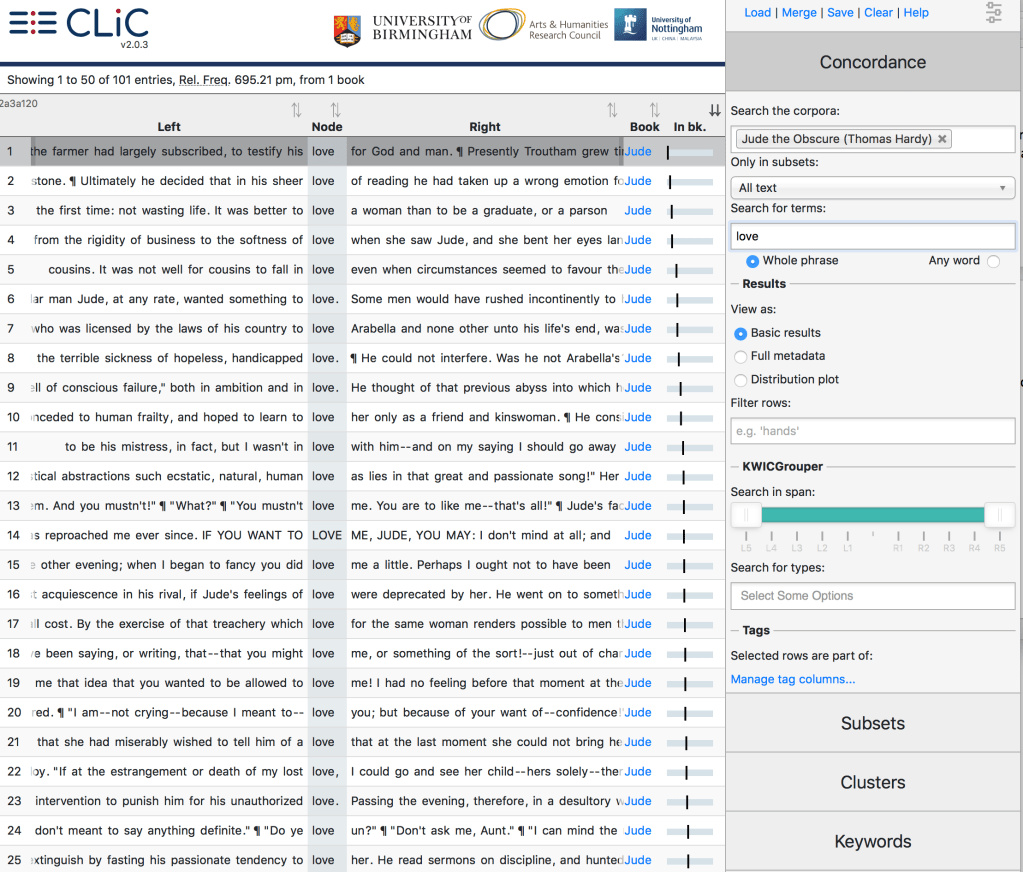
To begin with, Jude the Obscure, we started searching random keywords in order to analyze the texts. First, we analyzed the word “Love” and we started to gain some insights of what they were talking about. “Love” was used 101 times and this meant that we had to focus on on this particular theme. “Love” as we all interpret it means to be happy and excited. However, in this particular book “love” is darkness and is full of vile stories happening. To get more information and insights we wanted to search synonyms for the word “Love”.
To take our research to the next level, we decided to search the term “Happy” as a synonym. The reason is that “love” is always interrelated with “Happiness”. We closely read how “Happy” was being used and we noticed something very interesting. Happy, as we all know, is being excited and feeling good about something or someone. However, “Happy” in this context means tragic and sadness. By close reading, it seems that they never knew what “Happy” meant or felt.
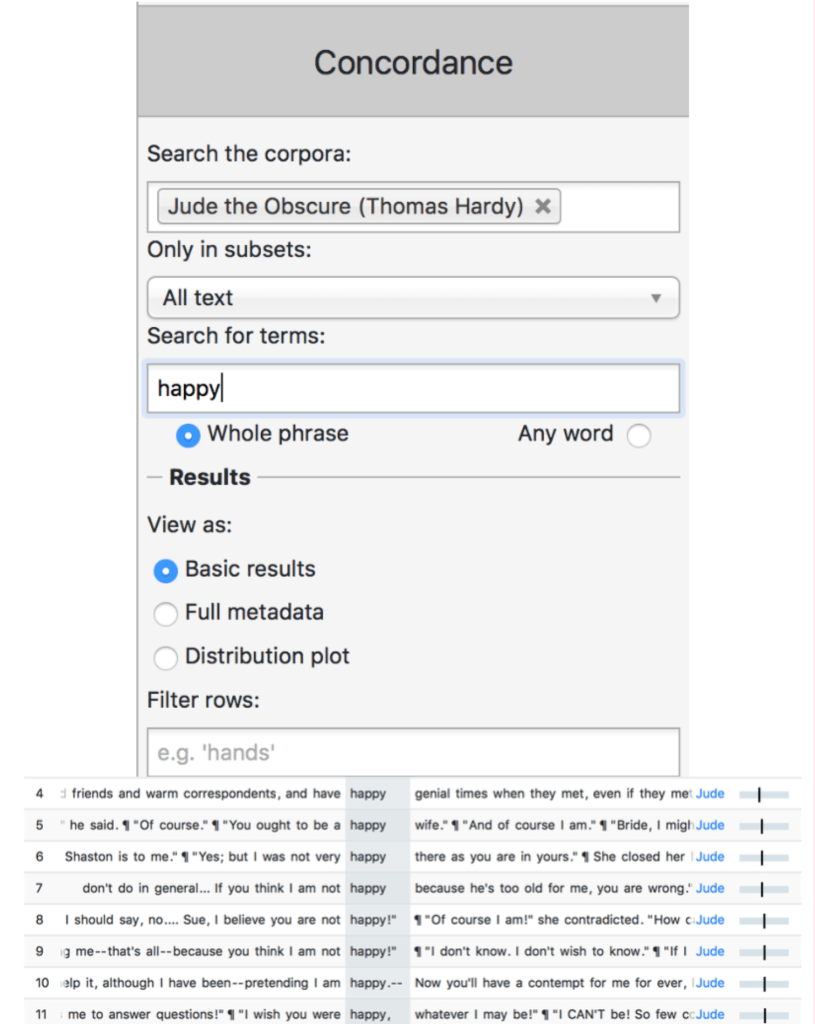
What is the most interesting is that the name Jude, which is written in the bible (Hebrew), means to be “praised”. This means that Jude must be used in a positive sense. However, by analyzing the previous texts we think the author is mainly using positive words but in negative contexts. Moreover, we used the cluster feature (3-gram) in order to see the frequency of the words and if most of them were negative.
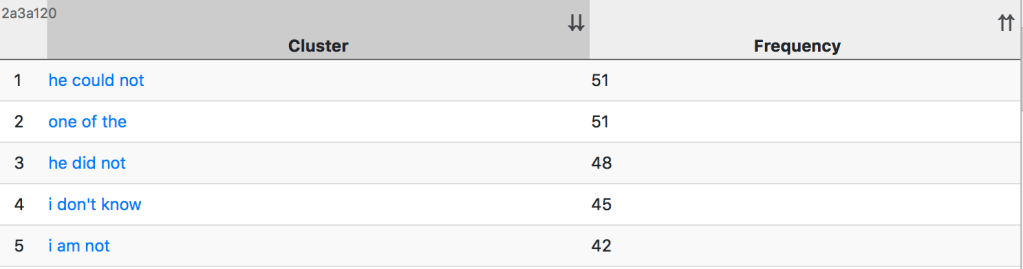
As you can see, he uses positive words but most of these sentences are always negative which makes the interpretation of Thomas Hardy’s texts really fascinating. With these interesting results, we got motivated to work on his second book which is Tess of the D’Urbervilles. To refresh our memory, we read a bit about the book in order to know what to search about. After that, we promptly went to CLiC and started to research about terms we found interesting.
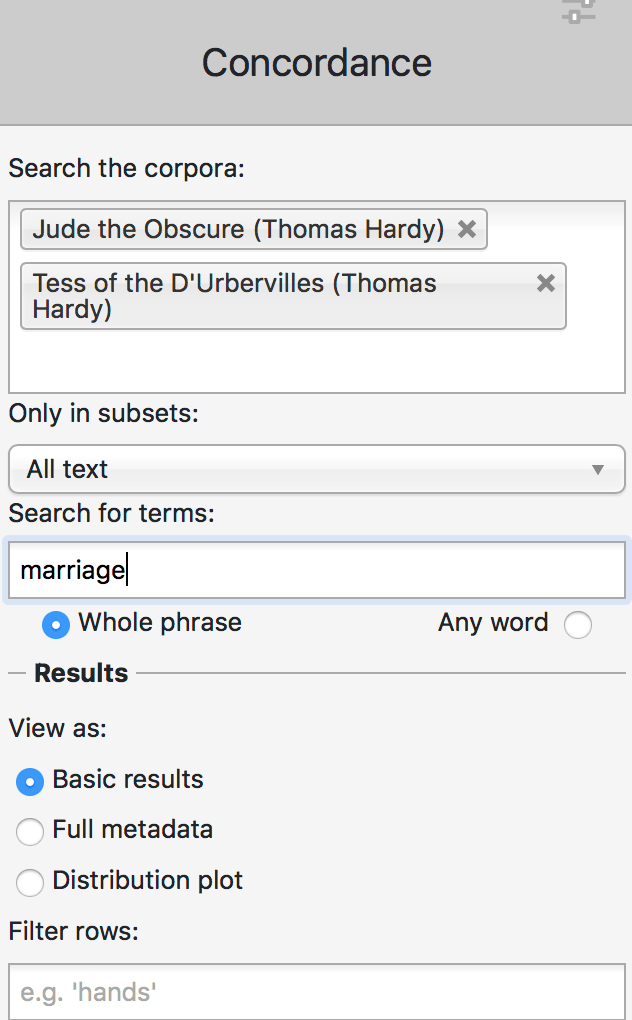
Tess of the D’Urbervilles is one of Thomas Hardy’s best books to date. It interconnects everything very smoothly and it has so many different meanings. One of the things that caught our eyes attention, is the word “Angel”. Is the word “Angel” meant to make us think there is a devil? Or is it just a name? After ambivalent feelings and mixture of ideas, we decided to search the term “marriage” and see if they were related.
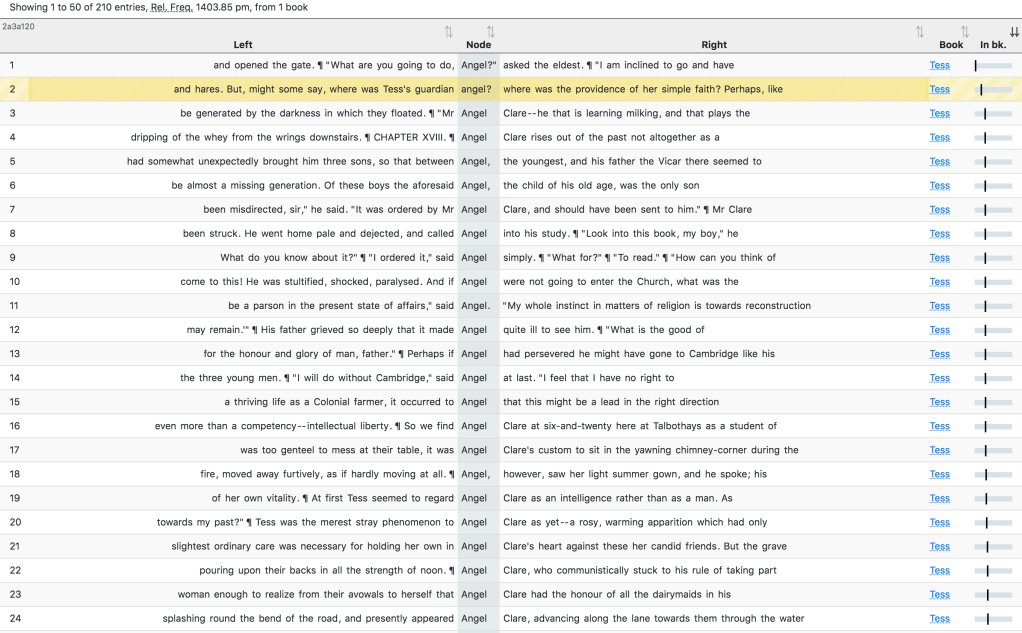

As shown in CLiC, Angel here seems to be in a relationship with Tess that doesn’t work out. Moreover, we searched the word “Die” to see if Tess really was in a vile situation.
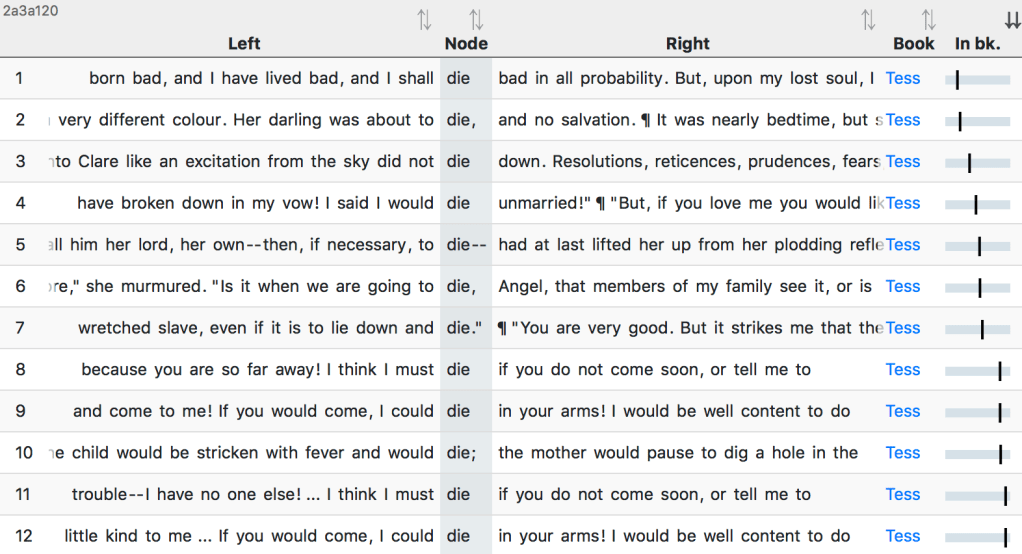
Here Tess seems desperate for angel and she would die without him. So, this triggered our inspiration into looking furthermore why Tess is always in need of marriage. With close reading, it seemed as if Tess was desperate, lonely, poor, and without freedom. We started to think why is Tess like that, so we kept on searching for terms (freedom, lonely, desperate, and etc.) After extensive research, we found the term “birds” being used. But that begs the question: Are birds only an object or do they symbolize Tess’s personality? Searching the term birds and close reading we noticed that, birds relate to Tess personality. That was very astonishing because “Birds” symbolize freedom and innocence.


#8 was a very interesting sentence because we were bewildered with the word serpent and the word bird used in the same sentence. Does the serpent mean that Tess was backstabbed or had a tragic history? and does the bird within this sentence mean she is innocent? According to our analysis, “birds” here are trying to symbolize Tess life and the progression of her lost freedom. Tess seems to be a bird in this story. To reinforce the statement that Tess is a bird:

#13 Feathers are what make birds interesting and we believe that the feathers are compared to Tess clothes. So, birds in this story are actually describing Tess or you can say they are actually Tess. One more thing that caught us our attention was the word pure. The reason is because birds are not only free but innocent and pure.
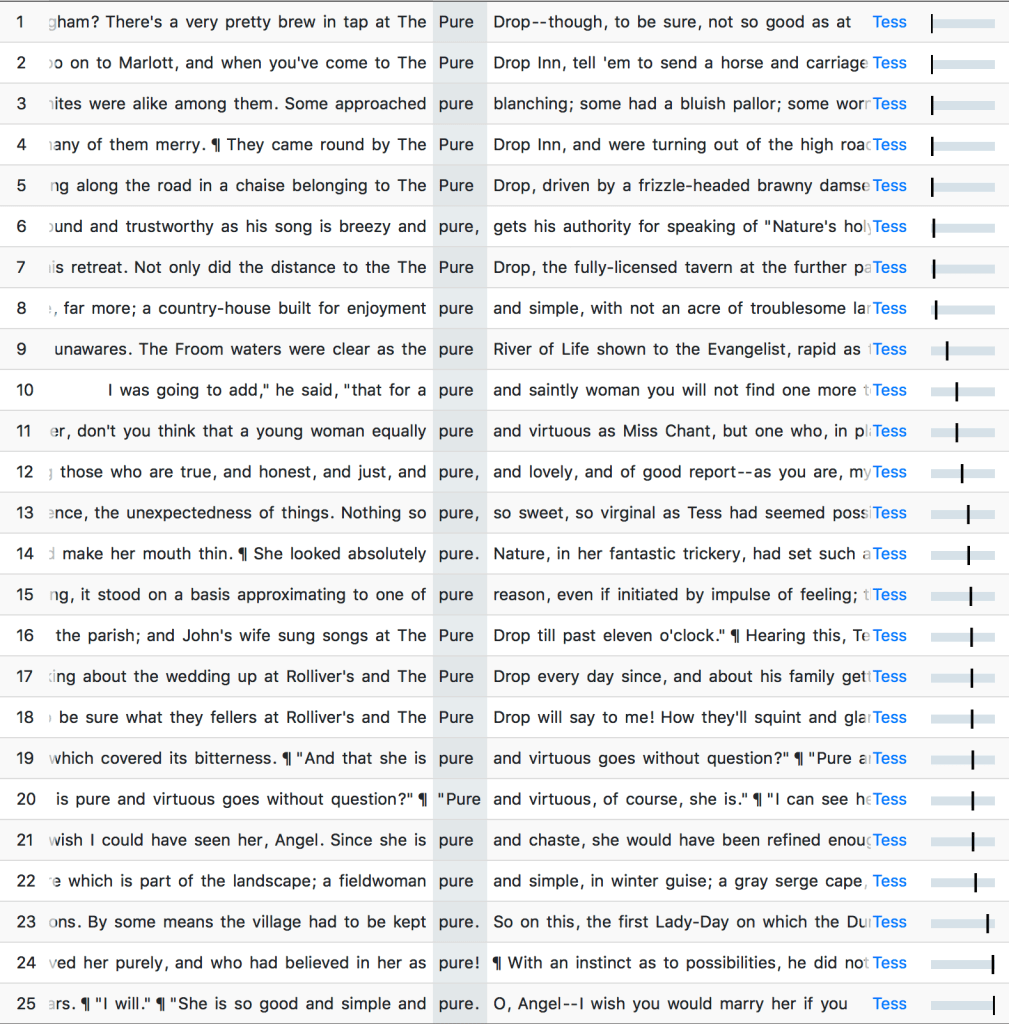
It states here that Tess is actually pure like a bird. So, from every angle you look at this story and close read, you will figure out that Tess is a bird but her life is a serpent.
At the end of our analysis, we realized that both books rotate around a very important topic which is marriage. We decided to compare both books and see how marriage is being used in both contexts.
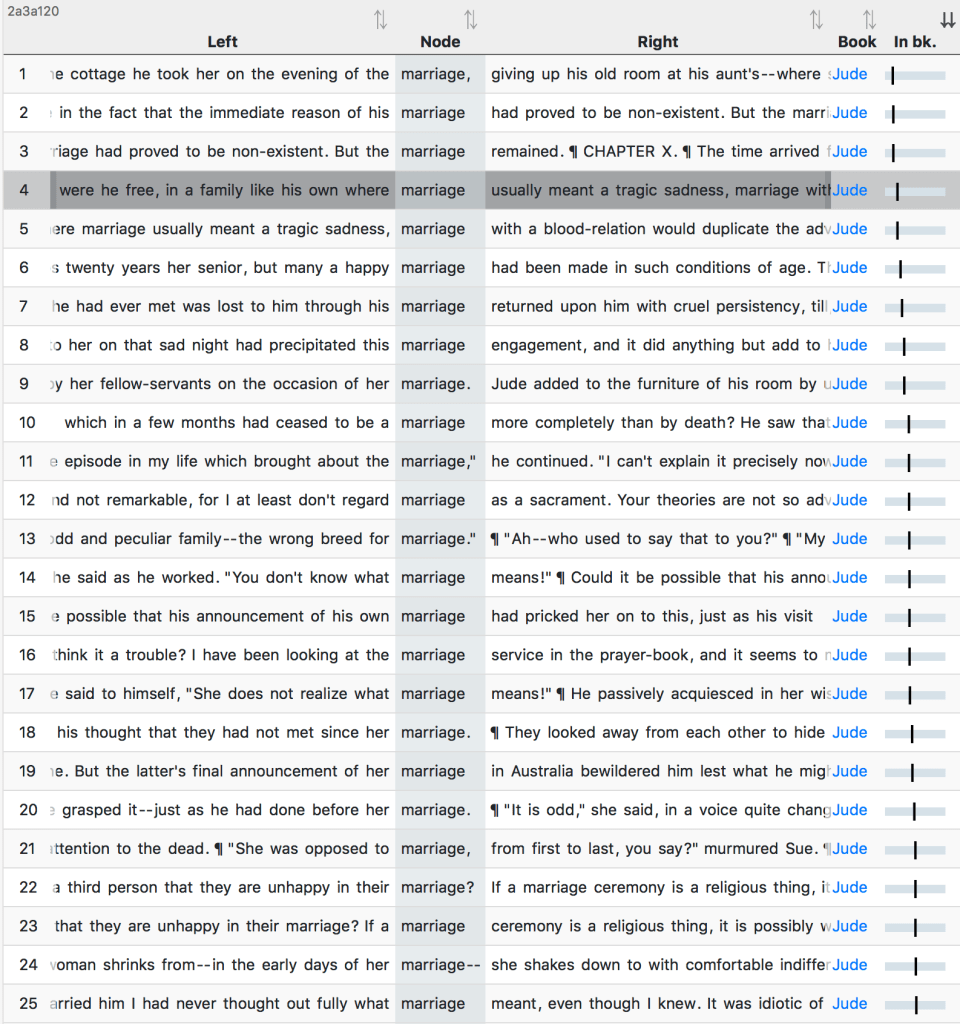
To our realization, both books seem to hint to us that “Marriage” is not happiness but it is pain and it brings tragedy to our lives. Thomas Hardy, close reading with CLiC, is really amazing. It lets you interpret texts and hints you what the book is talking to you about.
CLiC is an amazing tool for close and distant reading. Without this tool, it would have been impossible or should I say implausible to interpret these texts. We really worked hard to find out what does the term “Bird” means and that was the most amazing part of the research.
Doing some training in class, we really got the hang of using CLiC. It is user-friendly, so just surfing within the web platform is enough to learn. Any text you give to CLiC, it can handle it with ease and speed! You can easily find word trends, quantitative results, and data patterns. Some limiting features we wished CLiC would do with close reading is if it could give us advice on which words to use in our search. It would be more beneficial too if it can interpret some texts and give us some helpful hints on how to use the features. All in all, it really was an exciting research through CLiC.
VOYANT
Once we completed our analysis on CLiC, we retrieved digital copies of each novel using Gutenberg, which is a digital library of free eBooks that can be downloaded. We opened the texts online, then copied the texts onto Microsoft Word. After that we fixed each document so that is it ready for analysis, and converted them to plaintext.
Upon the start of our digital literary journey, our thought process was running wild with a multiple questions that were yet to be answered. We wondered what themes were presented in Thomas Hardy’s novels, if his personal life had any effect on his work, and if there was evidence of any form of pattern that is common amongst all his works. However, we realized that this broad approach to analyzing his work using Voyant Tools must be narrowed down to a more specific research objective.
Through using Voyant Tools for the exploration of our corpus, we began our analysis by evaluating the Cirrus for all 4 novels. Our findings reveal that the most frequent words used in the corpus were: “said” (3085 times), “like” (1195 times), “man” (1193 times), “time” (1085 times), and “know” (899). Evidently, it is clear that the word “said” is the most frequently used word in all of the novels we chose due to the presence of dialogue. Thus, we decided to add this word in the stopword list, as it is very repetitive and is primarily used to convey events in novels. Subsequently, we broadened the scale, anticipating the revelation of distinctive and frequently used words that we can analyze.
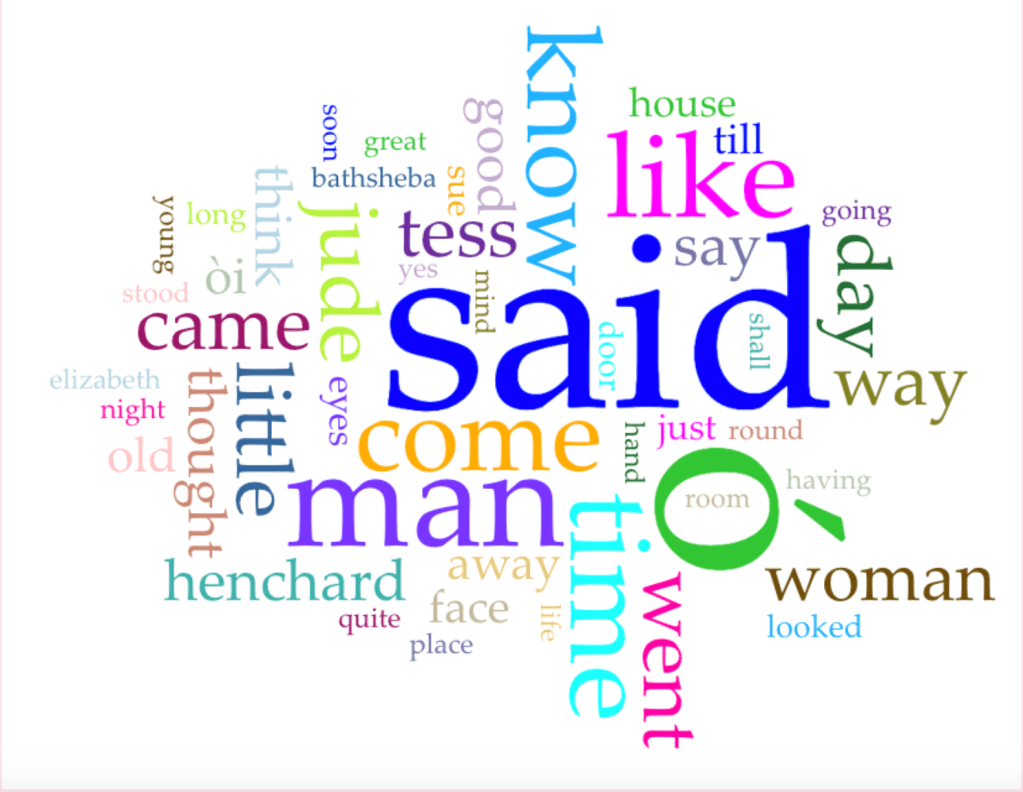
In the Cirrus, we can clearly see the word frequencies in the chosen selection of Hardy’s works. However, we are unable to assess the contextual background of each word. That being said, we decided to move to the Contexts tool to better understand the significance of the words in close reading to derive conclusions based on the different contexts. Next, we utilized the Reading tool in order to interpret the different contexts of each word to gain a deeper understanding. In addition, we used the Trends tool to verify whether or not the usage of the word was subject to a particular trend.
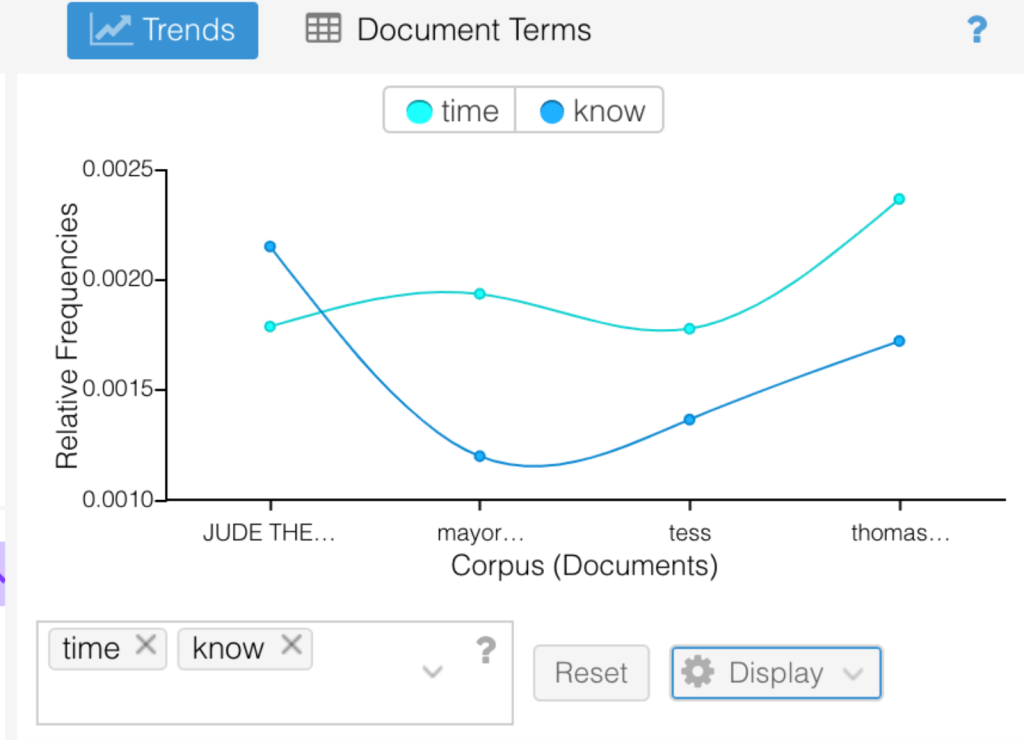
The word “time” is remarkably used in Hardy’s novels. In the above trend line we can compare the word “time” to another frequently used word “know”.
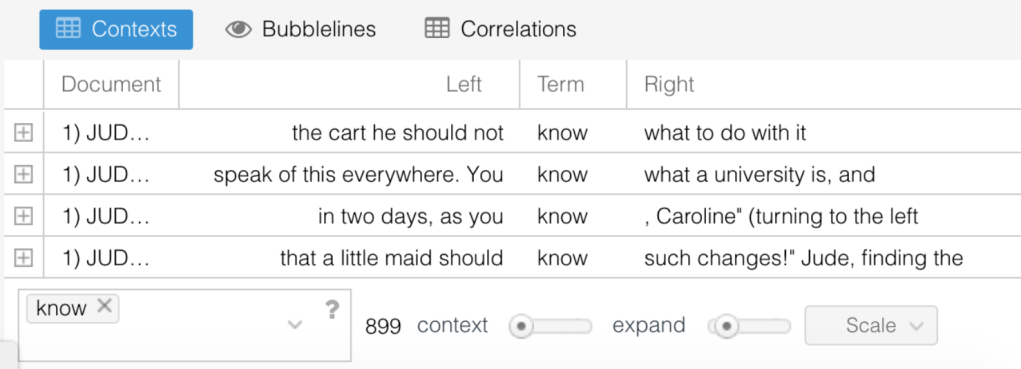
Furthermore, using the Contexts tool, Hardy’s use of the word “time” Furthermore, using the Contexts tool, Hardy’s use of the word “time” seems to hold a negative connotation in his novels. For example, “little time for correction by experience”, “afraid all this is taking up your time and giving trouble”. “striking of quarters seems to quicken the flight of time”. These quotes indicate the shortness of time which we are constantly battling against. Hardy’s main themes are marriage, death, and social pressure (Philip V. Allingham, 2014). Nevertheless, each theme is portrayed in a negative light, and Thomas Hardy’s perception of time is that it’s a pushing force that acts against man as he tries to control his destiny. Hardy views our destiny as shaping our futures, and learning from our pasts (such as Tess’ struggle to overcome her past), all linking back to the main theme of time. Thus, there is a clear discrepancy between longing and destiny.
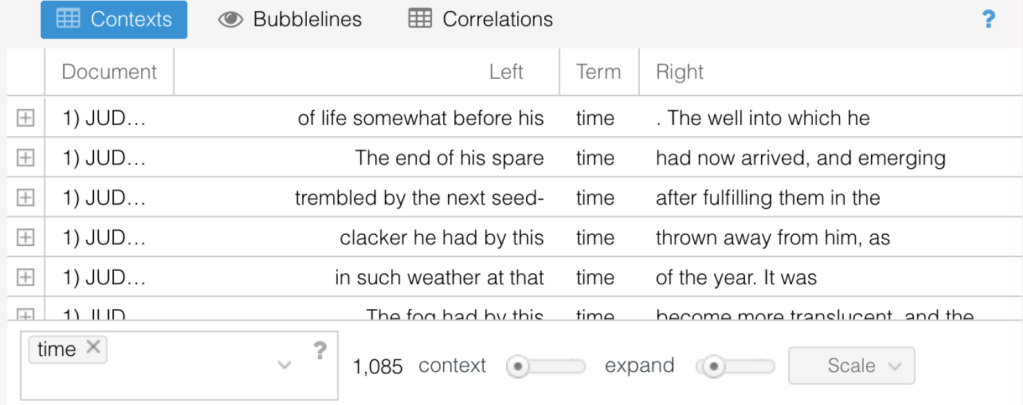
Moreover, the word “know” is used 950 times in his novels which is considered a great amount. This indicates that certainty is of great significance in Hardy’s literary works. We discovered a link to the theme of man vs. nature, as we are constantly trying to find the meaning of life, and are on a journey of learning and educating ourselves. However, we are faced with ambiguous events and uncertainty that pull us back, which there is no such thing as perfect knowledge.
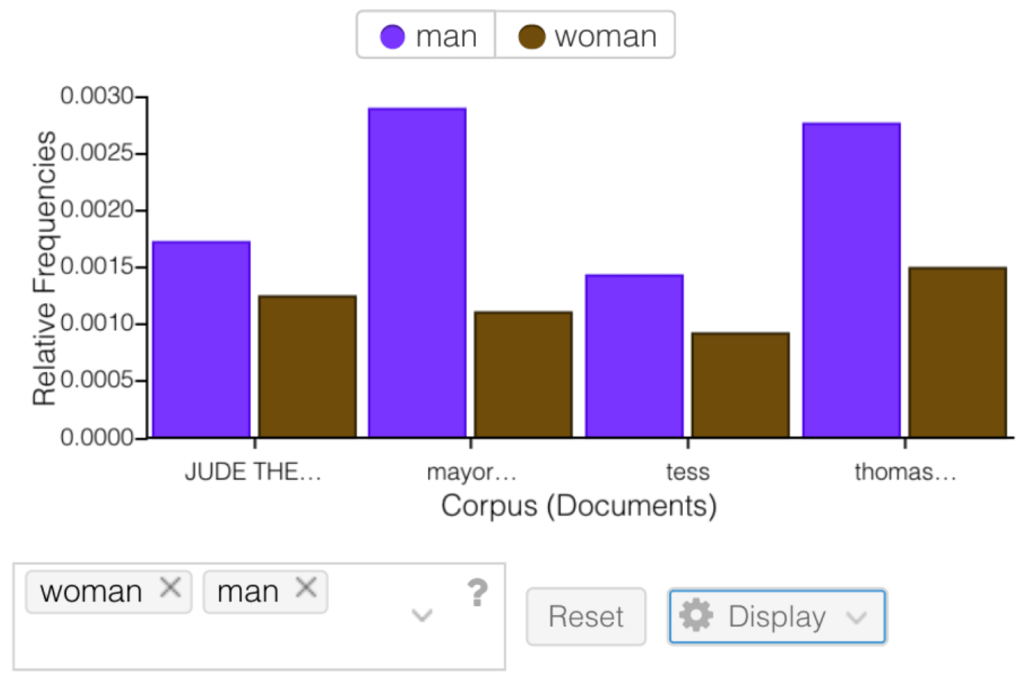
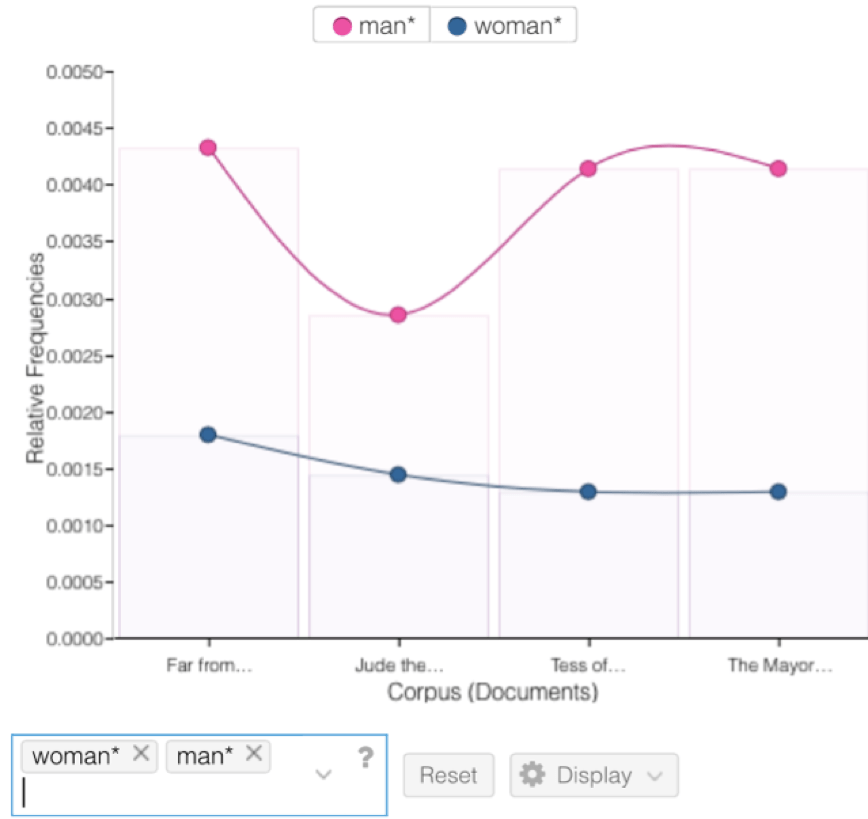
After excluding the word “said”, as previously mentioned, the most frequent word was “man” which is actually surprising knowing that Hardy’s literary works are primarily centered around women such as Tess in Tess of the d’Urbervilles, Jude and Sue in Jude the Obscure, and Bathsheba Everdene in Far from the Madding Crowd. Hardy identifies with the acts of the female protagonists in his novels and seems to emphasize female struggles due to society’s structure at the time. In our quest to discover why “man” was used far more than “woman”, even though the protagonists in the four chosen novels were mainly females, we concluded that the abundance of the word “man” could have been due to Hardy’s portrayal of life through the eyes of males, displaying male superiority in the Victorian era. Hardy significantly represents male characters, and how they were affected by heroines.
The word man is frequently used, as mentioned above, in order to reflect on the fact that men were superior to women at the time. While reading the different sentences, using the tool, when the word man was mentioned, I realized that they were actually put in this context. For example, “I wish we were rich enough to pay a man to do these things,” she said” is one of the sentences that actually caught my eye. In this sentence, the woman is the one doing the housework; in this case, the farm work. Being rich and a man gives you automatic escaping of this kind of work. The level of being a farmer, in that time, on the social ladder was very low. Therefore, this points out the social struggles that females went through back in the Victorian Era. In addition, we felt like the following example must be investigated in order to reflect on this superiority: “to have saved a man from death involved talk that should harmonize with the dignity of such a good deed”. Why is it that saving a man, in particular, such a big deal in this situation? Men were treated as an ideal individual; someone we should look up to and respect. This, therefore, reflects on the display of male superiority at the time.
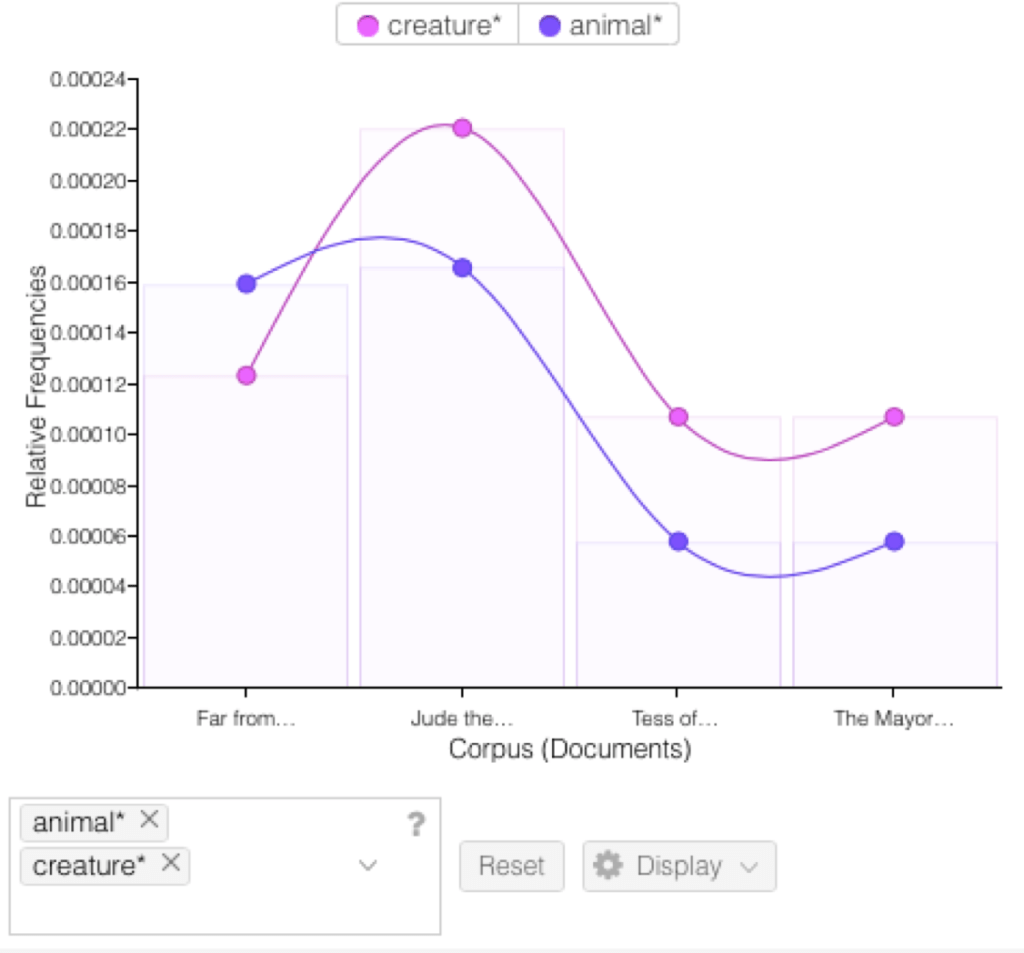
While going through Thomas Hardy’s work in these books, we noticed that the way he illustrated animals stood out. We found that when speaking of dogs, lambs, bulls or other animals, Hardy would use the word “creature” and not “animals”, and this shows by the number of times he used the word “creature”: it was applied 75 times in all four novels. The trend line also shows this revelation, we can see that the usage of the word “creature” keeps on increasing progressively, while the usage of the word “animal” decreases. It also came to our attention that Hardy referred to humans as “creatures” as well, which shows that he wants to make humans and animals equal, without any superiority between the two species. We can see that through some examples taken from the books “After placing the little creature with its mother, he stood and carefully examined the sky, to ascertain the time of night from thWhile going through Thomas Hardy’s work in these books, we noticed that the way he illustrated animals stood out. We found that when speaking of dogs, lambs, bulls or other animals, Hardy would use the word “creature” and not “animals”, and this shows by the number of times he used the word “creature”: it was applied 75 times in all four novels. The trend line also shows this revelation, we can see that the usage of the word “creature” keeps on increasing progressively, while the usage of the word “animal” decreases. It also came to our attention that Hardy referred to humans as “creatures” as well, which shows that he wants to make humans and animals equal, without any superiority between the two species. We can see that through some examples taken from the books “After placing the little creature with its mother, he stood and carefully examined the sky, to ascertain the time of night from the altitudes of the stars” (lamb), “Oak took it up, thinking it might be better to kill the creature to save it from pain…” (toad), and “He was a huge, heavy, and quiet creature, standing darkly against the low horizon…” (dog).
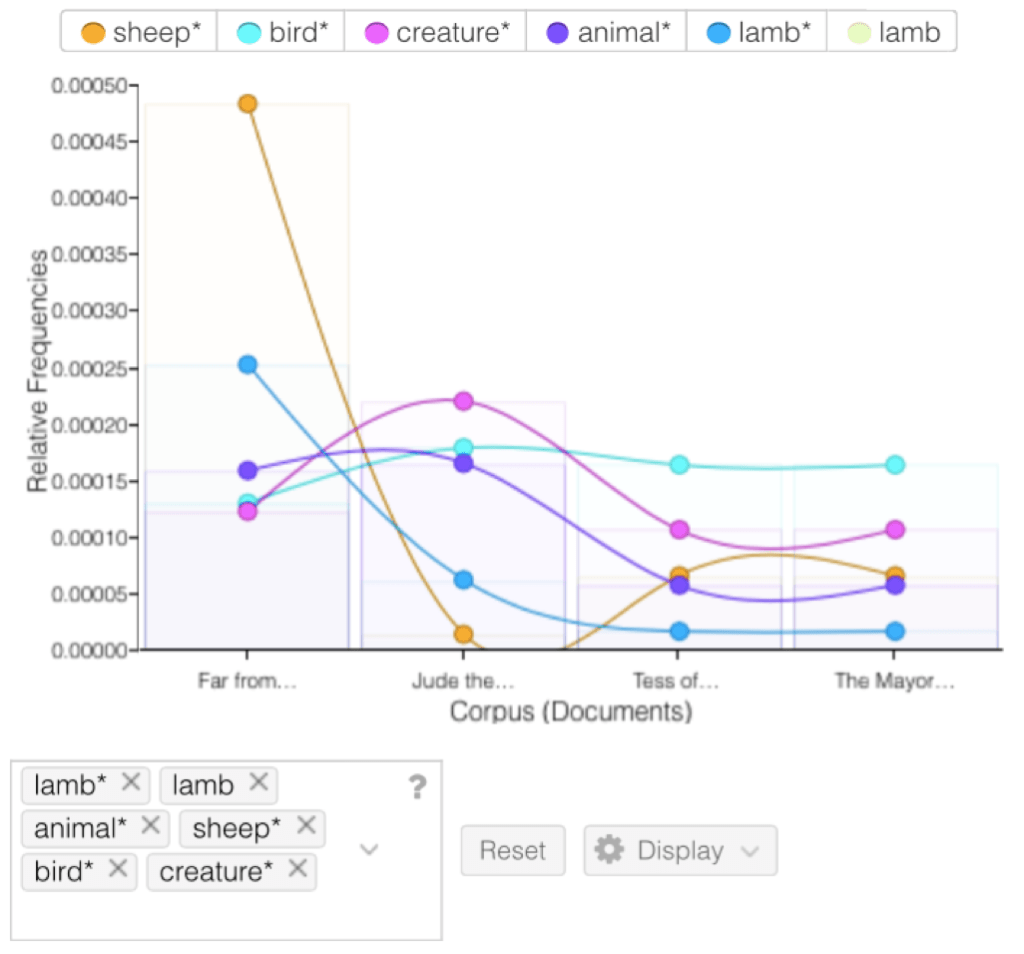
While checking the trend lines of Far From the Madding Crowd, we noticed that the word “sheep” was mentioned 83 times and “lambs” 32 times. This made us look more into it to check what is the importance of using these words that much. While reading some passages of the book, we concluded that Hardy wanted to symbolise how Nature controls humans and animals and always leads them to unpredictable outcomes. We can see that through some examples from the novel; a dog led a flock of sheep over a cliff, the sheep were later on ill…
What struck us the most, is that the word “birds” was mentioned a total of 104 times in the four novels. And we noticed that it always has a positive connotation, unlike the usage of “lamb” and “sheep”. Some examples are: “and affectionately surveyed the small birds around, “be a good boy, remember; and be kind to animals and birds, and read all you can”, “at length his heart grew sympathetic with the birds’ thwarted desires”
We could clearly see that animals and birds are very valuable to Hardy. This was noticeable in Hardy’s following poems, which in many instances revolved around birds.
this portrays his aesthetic sense. The fact that birds symbolize creatures that have freedom but are put in cages reflects on Hardy’s main ideas that humans are bound by the unexpected randomness of life and Nature although their love to live happily is truly strong.
The constant use of chance and circumstances by Thomas Hardy in the production of his plots has encouraged us to explore the use of words associated to that such as “nature”, “society,” “chance” and “human will” to clear up their conceptual significance and better understand his writing approach and the message he wants to deliver. This will be the foundation of our future work as our timeline builds.
As we went deeper into our research with Voyant Tools, our questions had changed to become more precise. What is the reason for Thomas Hardy’s negative perception on time, and what is the relation of this perception with his main themes? In what ways was the portrayal of males and females, and his views on conventions and society, shown in Hardy’s books? How did Thomas Hardy illustrate animals in his works, and specifically birds and sheep?
However, as we keep on delving into Thomas Hardy’s works, we continue to encounter new questions to ask and answer.
Based on our research, we found the answers to the above questions. He relates the concept of time to emotional unity. Time is a productive and evil force that separates lovers. It is something that destroys the good and turns it to evil (Astington, 1967).
We found that Hardy was always supporting women, in every novel of his, he tried to portray the patriarchal society and the way women were oppressed by men. Let’s take Tess of the D’Urbervilles as an example, in which the embodiment of inequality between men and women was represented in characters like Sergeant Troy in Far from the Madding Crowd and Angel Clare in Tess of the D’Urbervilles. Hardy specifically criticized traditional marriages, and emphasized on the fact that women are normal human beings that should be treated the same way as men. This was obvious in Tess of the D’Urbervilles, Hardy highlighted Tess’s qualities (mental and physical qualities), then showed us how she got slowly destroyed by her love towards a male character, she got almost raped, and was criticized immensely by him because she wasn’t up to his standards (Katharine, 1975). This gives us an idea about his views on the society of the Victorian era. Through his work, he tried to highlight the many flaws found in the Victorian system, he gave his female characters qualities such as “pure”, “strong”,” moral”, “high-minded”, even after these characters acted in a way that would be severely shamed by the Victorian society (Katharine, 1975).
While portraying animals, Thomas Hardy also chose to criticize the Victorian society, because they used to wonder about the real purpose of animals in life. He chose to use the word “creatures” instead of “animals” and even used this word to describe humans, he wants people to rethink about the real definition of “creatures” and show them it does not only embody humans, but animals too. He wants to bring attention to animals to create some equality between them and humans.
Thus, we can say that Thomas Hardy was always trying to challenge the tradition and the beliefs of the Victorian society, he wants to push his readers to rethink about their morals and ideologies towards women and animals specifically.
Using Voyant tools for the first time was a bit challenging, but the class session provided a lot of guidance and after many tries, we learned how to properly navigate through it. What we loved about Voyant tools is that it is accessible to everyone, you don’t have to be a specialist to be able to use it. The best thing about this tool is that it allows you to compare huge texts side by side, we are able to compare words or see how many times they were mentioned all through colored graphs, trend lines, bubble lines, which makes the analysis easier to understand. Voyant tools will help the readers read between the lines, the plot, understand the novel as a whole, and even understand the author’s personality, because distance reading uncovers hidden ideas that cannot be noticed through reading by the naked eye.
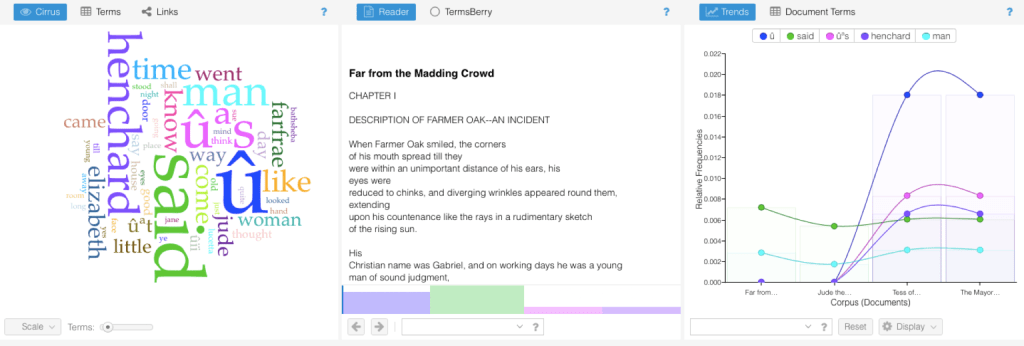
However, a disadvantage in Voyant Tools that we encountered is that we cannot save our results. This could be a problem since not being able to save results means that we cannot refer to them in the future. It was really difficult since we were working on this tool at different times, and each time, we had to upload the corpus again and restart. Voyant Tools does not allow you to compare frequent words used in novels with the ones in works of different authors of his time so that we could explore the uniqueness and significance which was a complication. And finally, for the trend line, it was hard to adjust the scale on the graph.
Reading Voyant Tools proved to be a rather new and interesting experience; distant reading is very different from the regular in-depth analysis of a text. Using Voyant Tools with distant-reading techniques enabled the possibility to read and analyze many texts in an efficient manner; seeing as how this method depends on graphs instead of words in the text, using such a tool saves so much time. Although beneficial, using distant reading does not give a deep, scrutinized analysis of the text; it could fall short in terms of truly reading into the text for deeper meanings, as it offers short, shallow readings. For instance, before starting writing novels, Hardy studied architecture. Architects are known to depict things in an aesthetic and detail-oriented way, therefore, it is interesting to see how this affects the way he depicts places and structures. In order to get a clear image, it is important to closely read the chapters instead of distant reading given that distant reading is what we do in Voyant Tools. In addition, distant reading doesn’t allow Hardy’s writing style to illuminate given that it is of great importance. Digital analysis is needed before distant reading, and then when we could find captivating word usage or trends and descriptions in precise books, going back to close reading of chapters to strongly develop ideas and analyses is therefore possible and advisable.
To wrap everything up, we have found Voyant Tools a very useful and recommended tool for textual analysis and distant reading. In the works of Thomas Hardy, it was an eye-opener to many things that we will certainly include in our final timeline.
This project was in collaboration with Vanessa, Mariam, Tamara and I.
 Issa's Blog